
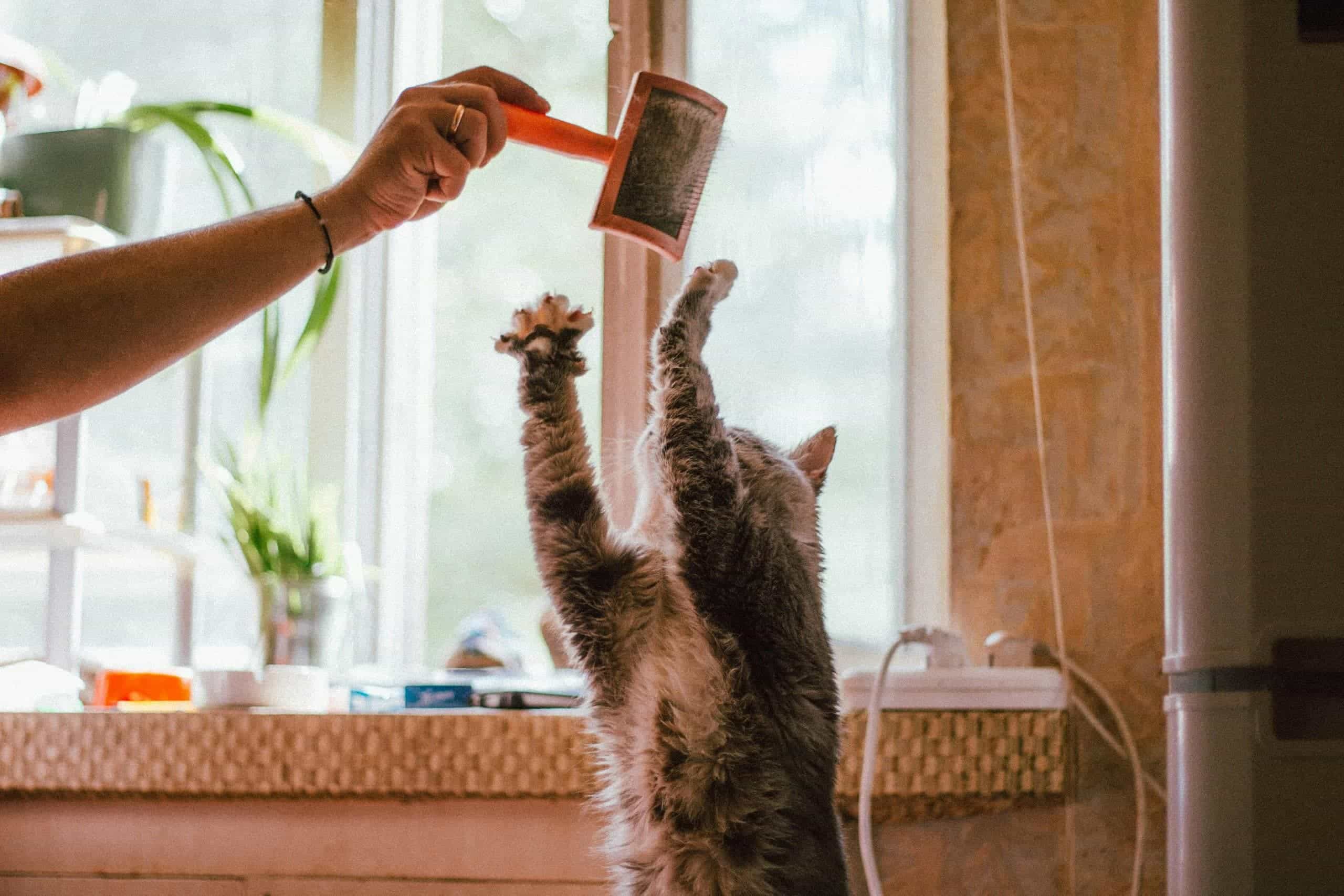
Safety Alone Does Not Create Well-Being
Many cat owners feel relieved when they transition a cat to a fully indoor life. In practical terms, that relief makes sense. Indoor cats are usually at lower risk of traffic injury, territorial fights, parasite exposure, poisoning, and a range of outdoor accidents that shorten life dramatically. For that reason alone, indoor living can be a very strong choice. But a quiet mistake often grows inside this otherwise loving decision: people begin to assume that once risk has been reduced, quality of life has automatically been solved.
That assumption leaves a surprising number of cats living in homes that are physically safe but behaviorally thin. They have shelter, meals, a litter tray, perhaps a comfortable bed, and some affection. Yet the environment may not offer enough challenge, enough choice, enough sensory richness, or enough control for a cat to feel settled in a deeper way. When this happens, the cat does not always make the problem obvious. Instead it may become passive, overattached, restless at night, destructive in small repetitive ways, or strangely sensitive to changes that seem trivial to humans.
The Difference Between Protection and Fulfillment
Cats are often underestimated because they do not demand in the same social way dogs do. They are less likely to stand at the door and announce a missing need in obvious terms. But a cat remains an animal built around territory, observation, movement, stalking, pause, concealment, decision-making, and pattern detection. These traits do not disappear just because the animal now lives among furniture instead of shrubs and fences. A home that offers no meaningful environmental complexity can quietly flatten the cat’s world until boredom, tension, or displaced behavior begin filling the gap.
This is why owners sometimes describe an indoor cat as “lazy” or “moody” when the real issue is environmental poverty. A cat sleeping all day is not always content. Sometimes it is simply under-engaged. A cat racing through the home at midnight is not necessarily being difficult. It may be trying to discharge energy and predatory drive that never found a place in the daytime routine.
Territory Matters More Than Floor Space
People often think of giving a cat “space” in terms of square meters on the ground. Cats, however, experience space vertically and psychologically as much as horizontally. A small apartment with shelves, climbing options, window perches, hidden resting spots, scratch points, and environmental variation may feel more satisfying than a larger but empty home.
Territory is also about control. Cats need to feel that they can choose where to retreat, where to observe, where to rest undisturbed, and how to move between zones. In homes where every sleeping place is exposed, every interaction is initiated by humans, and every corner feels functionally the same, the cat has less agency than many owners realize.
Why Agency Reduces Stress
Agency is one of the most underrated ideas in cat welfare. An animal that can choose is often calmer than one that is constantly managed. If a cat can move upward when guests arrive, hide when noise increases, scratch in approved places, and find a quiet resource zone away from social traffic, the nervous system has more room to regulate itself. When none of these options exist, small stressors build into larger behavior issues.
That is one reason why punishment works so badly with cats. It usually removes behavior without solving the unmet need underneath it. A cat scratching the couch may need more scratch variety, better placement, or a more emotionally secure territory—not correction alone. A cat waking the household at night may need better play timing, more feeding structure, or more environmental engagement during the day.
Hunting Instinct Needs an Outlet
Even affectionate companion cats still carry the structure of small hunters. The sequence of watch, stalk, chase, pounce, catch, and consume is deeply built into feline behavior. Indoor life often interrupts that sequence almost completely. Food arrives in a bowl without effort. Movement in the home becomes predictable. Objects rarely behave in interesting ways. Over time, the cat may begin inventing substitute targets: feet under blankets, hands moving near furniture, other pets, cords, shadows, or frantic night running.
Interactive play helps because it restores fragments of the predatory sequence. The goal is not merely to tire the cat out. The goal is to give form to instinct. A wand toy moved like real prey, a short stalk-and-pounce game before meals, treat puzzles, scent novelty, and rotating toy access all make the indoor environment more legible to a hunting brain.
Feeding Can Also Be Enrichment
Many owners overlook the role of food presentation. Bowl feeding is efficient, but it can make life too effortless for some cats. Puzzle feeders, scatter feeding in safe areas, treat trails, or simple search games can turn meals into activity rather than passive intake. This matters especially for cats who overeat from boredom or under-engage with the home.
The point is not to make life difficult. It is to make life interesting enough that the cat remains mentally active without becoming chronically frustrated.
Social Life Must Respect Cat Logic
Another common error is assuming that affection automatically compensates for weak environmental design. Some cats love social closeness, but even very loving cats need interaction on terms they can partly control. Chasing a cat for attention, repeatedly moving it from rest spots, overwhelming it with handling, or ignoring subtle signs of overstimulation can slowly make the home feel less safe.
Good cat relationships are built on reading. Ear position, tail movement, whisker posture, body tension, blinking, approach style, and willingness to remain nearby all tell a story. Owners who notice these small details often discover that their cats become more affectionate, not less, when pressure decreases.
Multi-Cat Homes Need More Than Good Intentions
In homes with more than one cat, enrichment and territory become even more important. Cats do not always fight openly when a resource structure is poor. Instead they may engage in blocking, staring, silent displacement, litter box avoidance, overgrooming, or subtle social withdrawal. Owners then assume the cats “tolerate each other” when in fact the household is organized around chronic low-level tension.
More litter areas, more elevated pathways, more feeding separation, more retreat spots, and better distribution of valuable resources can transform the emotional tone of a multi-cat home. Harmony is often architectural before it is interpersonal.
Conclusion
A good indoor cat life is not defined by the absence of danger alone. It is defined by the presence of purpose, territory, agency, and species-appropriate engagement. When owners understand this, cat care becomes less about managing nuisance behaviors and more about building a habitat in which calm, confidence, curiosity, and companionship can naturally grow. An indoor cat does not need the outdoors to live well. But it does need an indoor world that is rich enough to feel alive.
The tips for flying with pets (carrier training, vet paperwork) made our cross-country move stress-free. My cat slept the whole flight.
The article on managing pet waste in the yard (composting vs. disposal) is very practical. I started a designated pet waste bin.
The guide on daily brushing for long-haired cats prevented mats. My Maine Coon actually enjoys the grooming sessions now.
I used the guide to create a 'dog wash station' in my mudroom with a cheap utility sink. Bath time is no longer a backache.
The article about setting up a catio (cat patio) is inspiring. I built a small one on my balcony and my indoor cat is obsessed.
{{ comment.message }}